
If you are thinking about installing solar panels, it is totally understandable to wonder how well they perform in winter. Shorter days, cloudy skies and cold temperatures can make it seem like solar energy would struggle at this time of year. The reassuring news is that solar panels do still work throughout winter because they rely on daylight, not heat. While you will see lower output compared to summer, modern solar systems are designed to continue generating power even on cold or overcast days. Understanding what affects winter performance helps you set realistic expectations and get the most from your system year round.
Yes, they do. Solar panels generate electricity whenever daylight reaches their surface, even if the weather is gloomy. Winter does reduce total output, mostly because the days are shorter and the sun sits lower in the sky. You will not get the same peak performance you see in the summer months, but your system will still produce a steady amount of power. Many homes find that even reduced winter generation helps cut energy bills and keeps their system active throughout the colder season.
Cold weather does not stop solar panels from working. In fact, cool temperatures can actually help solar cells operate more efficiently. Solar panels convert light into electricity, not heat, so a crisp winter day with clear skies can deliver surprisingly strong performance. What affects output more than temperature is simply the amount of available daylight. But as long as there is light, even indirect light, your panels will continue generating electricity.
Winter production varies depending on your roof angle, shading, location and system size, but most homes can expect somewhere between a quarter and a third of their usual summer output. For example, a system that produces a high amount of daily energy in July will naturally produce much less in December. This seasonal drop is completely normal and is already taken into account when installers calculate estimated annual savings. The majority of your electricity will be generated between spring and early autumn, with winter providing a helpful, though smaller, contribution.
Yes. Solar panels use both direct sunlight and diffused light, which means they continue working even when the sky is overcast. Output will be lower than on bright days, but your system does not switch off. Rain is also not a problem. In fact, rainfall can help keep panels clean by washing away dust or debris, allowing them to work more efficiently when brighter weather returns. Even through thick cloud, panels will usually produce at least some electricity.
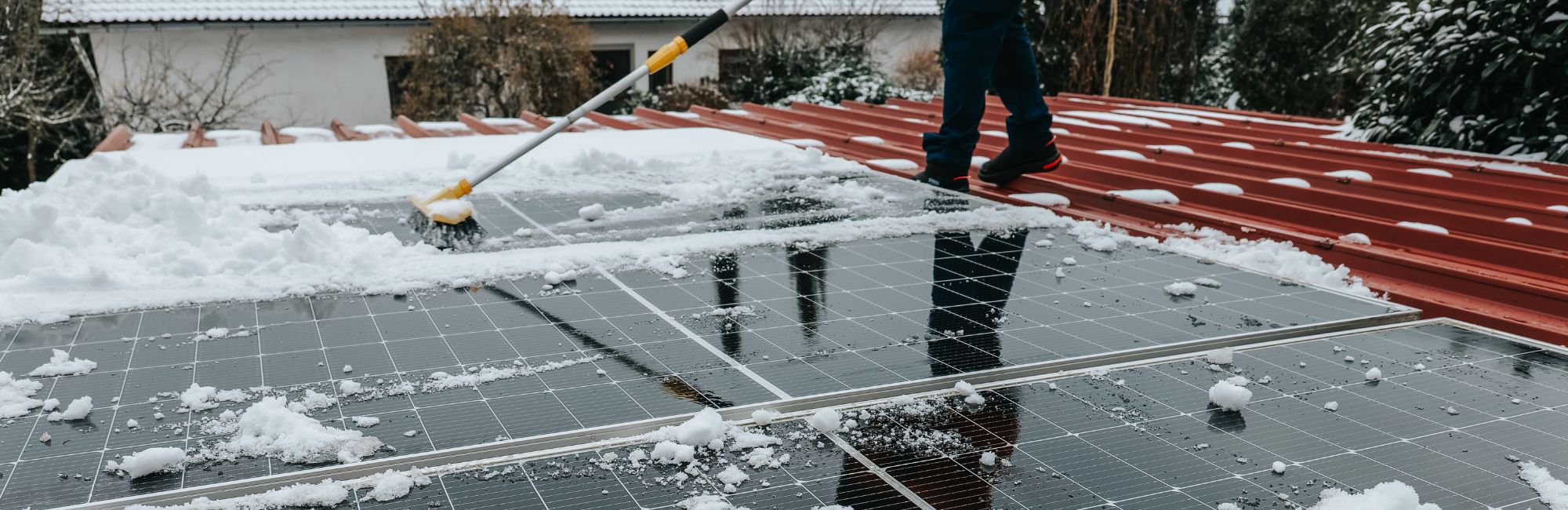
Snow can temporarily block sunlight if it forms a full layer over your panels. However, in most parts of the UK, heavy snow is rare and usually melts or slides off quickly. Because panels are installed at an angle and absorb warmth from any available sunlight, snow tends to clear faster than you might expect. Once the panels are exposed again, they immediately resume generating electricity. Light dustings of snow often have minimal effects and may slip off on their own after a short time.
There are several practical ways to help your panels perform better in winter. Keeping them clean and free from leaves or debris ensures more light reaches the surface. If your system uses optimisers or microinverters, these can help reduce the impact of shading from chimneys or nearby trees. Using high efficiency panels also gives you an advantage in low light conditions.
A home battery can be especially useful in winter because it allows you to store the energy you produce during the day and use it in the evenings when demand is higher. Making small changes to when you run appliances, such as using washing machines or dishwashers during daylight hours, can also increase your self‑consumption.
Yes, solar panels remain a strong investment for UK homes. Although winter production is lower, solar energy pays off across the entire year. The bulk of your savings come from the longer, brighter days between March and October, while winter still provides helpful generation.
Because panels rely on daylight rather than heat, the UK’s climate is actually well suited to solar energy. With rising energy prices and improvements in solar technology, homeowners across the country continue to benefit from installing solar systems, even when the winter months roll in.