Ventilation guide
Please note that any installations must adhere to the relevant regulations in place at the time of install. These regulations are subject to change.
Key Points to Consider
- Some one must be present during the installation – this can be you, or someone you trust
- Building regulations require a property to be correctly ventilated, this is something we must consider as part of the installations
What is ventilation? Why is it important ?
Ventilation is the exchange of fresh air from the outside and stale air and moisture from the inside of a property.
Current building regulations and legislation require adequate ventilation to be installed in specific circumstances. This can include:
- When insulation is being installed – this is because insulation will make your home more ‘air-tight’, meaning less air can flow through naturally. What qualifies as adequate will depend on your property.
- When damp or mould issues have been identified at the property – this is because these issues can indicate that there is not enough air flow through the property to remove the moisture from the air.
There are two types of ventilation: controlled and uncontrolled
- Uncontrolled or natural ventilation cannot be turned on or off. This can include drafts around ill-fitting windows, doors, gaps in the floors etc.
- Controlled ventilation can be used to regulate the amount of air flow through the property.
Your property’s current ventilation/air flow can be impacted by features of the property such as any chimneys (blocked/unblocked), flues, wall type or floor type, as well as the ventilation already present at the property such as extraction fans.
Too much ventilation causes high heat loss and uncomfortable temperatures , whilst too little ventilation can lead to damp and mould issues.
Adequate ventilation is necessary to:
- Maintain ‘fresh’ air to breathe
- Provide oxygen for combustion
- Remove excess water vapour
- Avoiding overheating
Common examples of ventilation include:
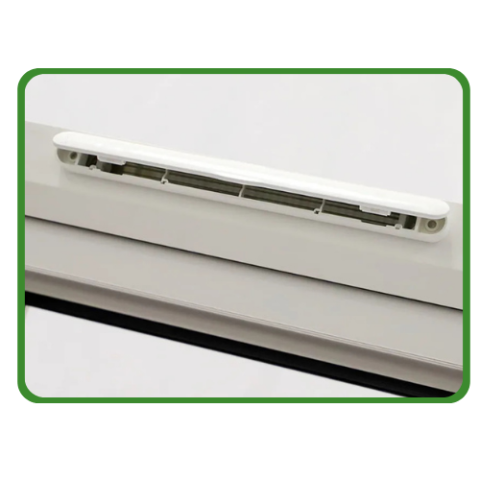
| Trickle vents
Small, adjustable vents installed in window or door frames to provide continuous, controlled ventilation, allowing a small amount of fresh air to circulate even when windows are closed . These are always left open, except in the case of extreme weather. |
 |
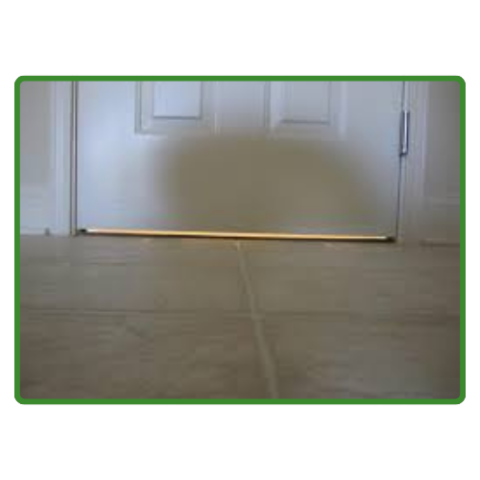
| Door undercuts A small gap intentionally created between the bottom of a door and the floor to allow air to circulate between rooms. |
 |
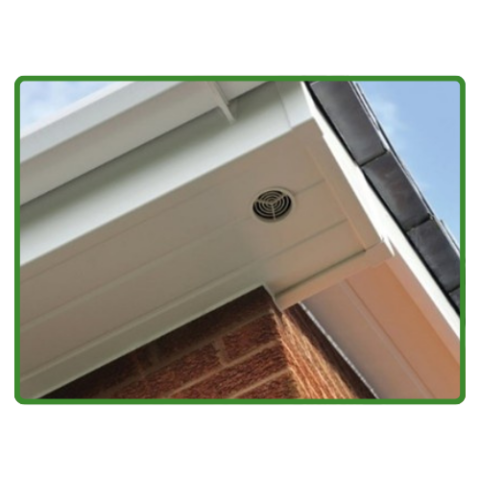
| Soffit vents
Openings, often found in the underside of a roof’s overhang (the soffit), that allow air to circulate in and out of the attic space. |
 |
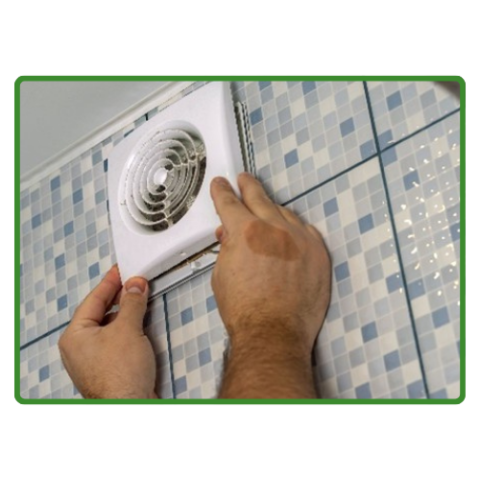
| Extraction fans – Decentralised Mechanical Extract Ventilation (dMEV) dMEV fans operate continuously in each wet room of the property. They run at a low (trickle) speed unless boost speeds are activated by either an external switch or humidity. |
 |
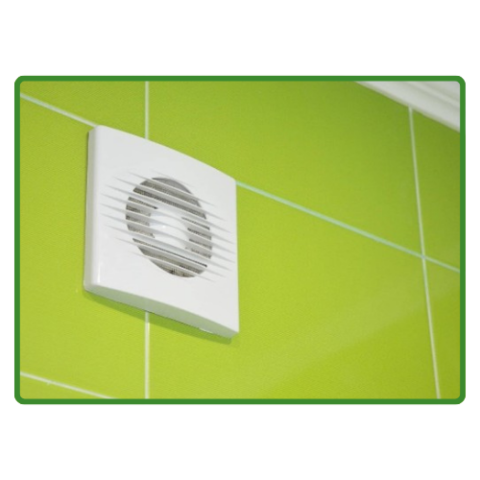
| Extraction Fans – intermittent extraction ventilation (IEV)
Rather than running continuously, IEV fans are activated by a light switch, timers, or humidity sensors. |
 |
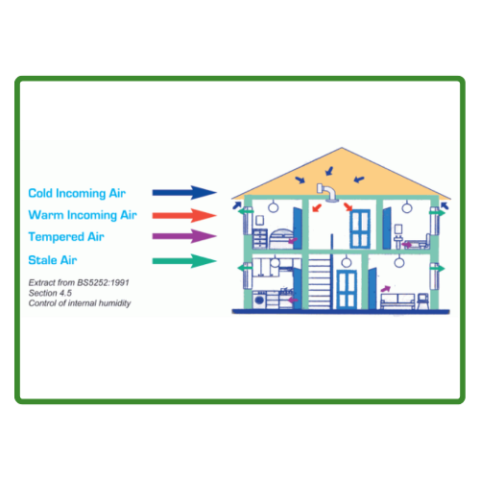
| Positive input ventilation A whole-house system that encourages the movement of air from inside to outside the property from a unit that is typically installed in a loft. |
 |
| Mechanical ventilation heat recovery system A whole-house system that extracts warm, damp air from the home and draws in fresh air from the outside. The warm, extracted air is passed through a heat exchanger to recover the heat before being expelled outside. The cool, fresh outside air is also passed through the heat exchanger, without coming into direct contact with the pollutant air where it is pre-warmed before being pumped into the property. |
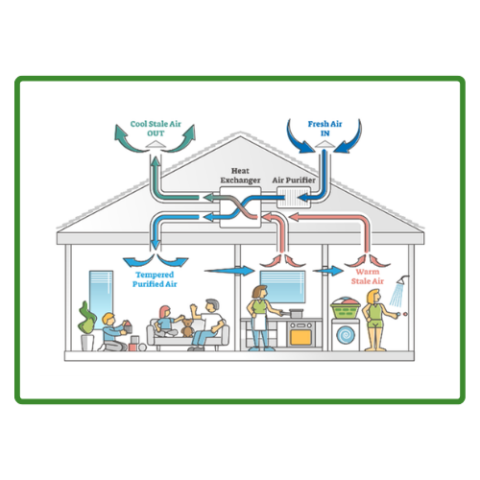 |
The Installation
An air pressure test may be conducted to assess how effectively the property prevents air from leaking in or out through its structure. This will typically be carried before and after the installation to confirm that the completed works have achieved the required standard.
A detailed plan of the required works, known as a retrofit design, is completed after the technical survey. This will allow us to advise you on what ventilation we are required to install and where in the property this will be. If you have any specific requirements such as access, these will be considered as part of the design. Please contact YES if you have any concerns about the property’s retrofit design.
Installers will need to access both inside and outside the property to complete the works. The specific locations they will need access to will have been confirmed when you were informed of the installation plans. Minor electrical works will be required if mechanical ventilation such as extractor fans are being installed.
The typical installation for ventilation takes 1-2 days. However, this can vary depending on what works are required such as additional electrical works. Please confirm this with YES or the installers if you are uncertain.
Handover Documents
You can expect the following documents to be provided once the installation is complete, and the work has been signed off.
- Relevant manufacturer warranties
- Electrical installation certificate (if applicable)
Ventilation is installed as part of an insulation installation. You will also receive the documents for this associated insulation.
Do I have to have ventilation?
Do I have to have ventilation?
- Building regulations require a property to be correctly ventilated, this is something we must consider as part of the installations.
- If a property does not have adequate ventilation it will lead to poor internal air quality (IAQ) and increased moisture which can lead to issues with condensation and mould.
- Should you get a gas or carbon monoxide leak these vents could play an important part in saving your life!
Won’t it cause condensation in my house?
- Adequate ventilation is essential for regulating the moisture level in your property.
- This works by removing the excess moisture from the air before it has chance to condensate inside the property.
Won’t it make my house colder?
- It is important to find a balance between well heated and well ventilated.
- Adequate heating refers to keeping the temperature of your walls (mainly the external ones) above their dew point. This is normally above 16-17 °C and keeping room temp around 21°C.
- Showering/bathing and cooking produce a lot of moisture which is why an extractor fan may be installed in these “wet rooms”. Opening a window immediately after showering or cooking is also beneficial, even though it may seem counterintuitive during colder months, as you let cold air in, but the priority is letting moisture-filled air escape.